
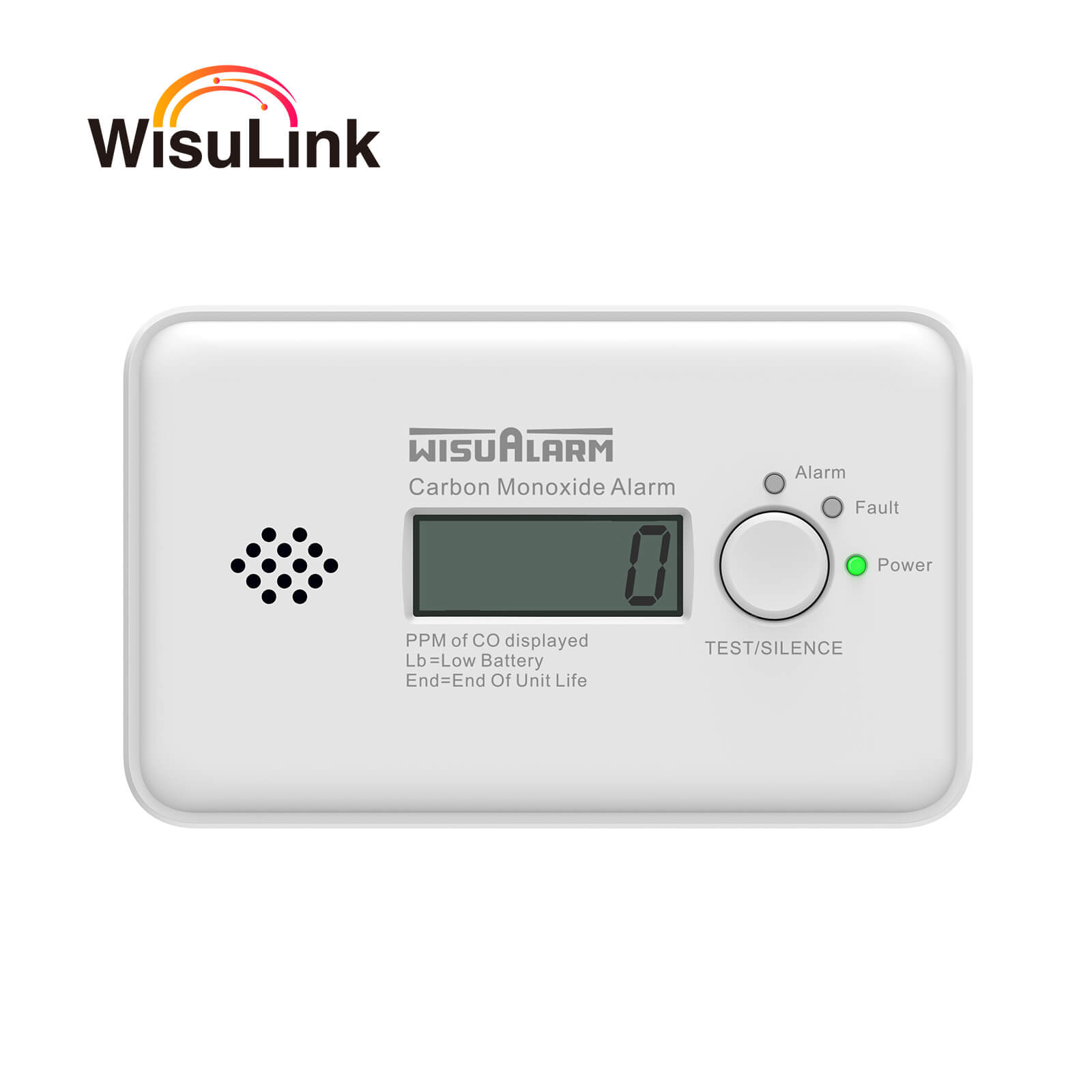
86.6 mm × 86.6 mm × 29.2 mm (3.41" × 3.41"× 1.15")
Certificazione
CE, EN50194
CE, EN50194
Domande frequenti
Domande frequenti
Il rilevatore di gas è la stessa cosa del rilevatore di monossido di carbonio?
No, un rilevatore di gas e un rilevatore di monossido di carbonio non sono la stessa cosa. Un allarme gas rileva una varietà di gas, tra cui gas naturale e propano. Ti avvisa di potenziali perdite e aiuta a prevenire incidenti. D'altro canto, un allarme monossido di carbonio rileva specificamente il gas inodore e incolore che può essere prodotto dalla combustione di carburanti. È progettato per proteggere dall'avvelenamento da monossido di carbonio, che può essere mortale. Sebbene entrambi gli allarmi si concentrino sulla sicurezza, hanno scopi diversi.
Dove dovrei posizionare un rilevatore di gas?
Un rilevatore di gas dovrebbe essere installato in luoghi in cui sono presenti apparecchi o tubi a gas, come vicino a fornelli a gas, scaldabagni o forni. Si consiglia inoltre di posizionare un allarme gas vicino a qualsiasi potenziale fonte di perdite di gas, come in scantinati o locali di servizio. È importante seguire le istruzioni del produttore per un corretto posizionamento e per garantire la massima efficacia nel rilevamento delle perdite di gas.
Con quale frequenza è necessario testare e sottoporre a manutenzione i rilevatori di gas?
I rilevatori di gas devono essere testati regolarmente per assicurarsi che funzionino correttamente. In genere, si consiglia di testarli almeno una volta al mese premendo il pulsante di prova. Inoltre, è importante mantenere gli allarmi di gas puliti e privi di polvere o detriti.
I rilevatori di gas in Europa sono conformi agli standard di sicurezza?
Sì, i nostri rilevatori di gas sono tutti certificati CE e conformi agli standard del mercato europeo, quindi puoi acquistarli e utilizzarli in tutta sicurezza.
In the modern era of the "Internet of Things" (IoT), we have grown accustomed to controlling our lights, thermostats, and security cameras from the palms of our hands. Naturally, this...
As the bitter cold of a German winter settles in, from the snowy peaks of the Alps to the windswept plains of the North, our homes become our sanctuaries. We...
Living in an apartment offers convenience and community, but it also presents unique fire safety challenges. Unlike a standalone house, an apartment is part of a larger structure where the...
As temperatures drop to their lowest in January, we all retreat into the warmth and comfort of our homes. But while we shield ourselves from the frost, an invisible danger...
In Europe, and particularly in Germany, the home is more than just a place of residence—it is a sanctuary built on the foundations of safety and quality (Sicherheit und Qualität)....
When it comes to fire safety in Germany and across Europe, the technical terminology can often feel like an alphabet soup of acronyms: DIN, EN, VdS, and CE. If you...
As the chill of the European winter settles across the continent, from the snow-dusted streets of Berlin to the misty valleys of the Ardennes, millions of households turn to natural...
Fire safety is no longer a matter of "if," but "where" and "how many." Across Europe, fire safety regulations have undergone a significant tightening over the last few years. Whether...
In an era where technology is moving faster than ever, the way we protect our homes and businesses is undergoing a fundamental transformation. For decades, the "gold standard" of security...