


Introduction: Beyond the Beep – A New Era of Fire Protection
For decades, the standard fire safety protocol in European households was simple: install a single, battery-operated smoke detector in the hallway and hope it never makes a sound. However, as European architecture evolves and our homes become filled with more electronics, lithium-ion batteries, and open-plan designs, the "standalone" alarm has become a relic of the past.
Across the EU—from the strict regulations in Germany to the recent legislative overhauls in Scotland and Scandinavia—there is a growing consensus: Interconnectivity is no longer an optional upgrade; it is a life-saving necessity. In this comprehensive guide, we will explore the science behind interconnected smoke alarms, the shifting legal landscape across Europe, and why a networked approach to fire safety is the only way to truly protect a modern home.
Part 1: The Critical Failure of Standalone Alarms
The primary limitation of a traditional, non-linked smoke alarm is its acoustic range. In a typical European home with solid walls and fire-rated doors, the sound of an alarm triggered in the kitchen or basement rarely reaches a sleeping occupant on the top floor with sufficient volume to wake them.
1.1 The "Decibel Drop" and Sleep Psychology
Scientific studies on "waking effectiveness" show that an alarm needs to reach approximately 75–85 decibels at the bedhead to reliably wake a deep sleeper. A standalone alarm behind a closed door loses roughly 10–15 decibels for every wall it must penetrate. By the time the sound reaches you, it may be too faint to override the brain's sleep state.
1.2 The Time-to-Ignition Factor
In the 1970s, the average time to evacuate a house fire was 17 minutes. Today, due to the prevalence of synthetic materials in modern furniture (which burn faster and hotter), that window has shrunk to under 3 minutes. If an alarm is isolated in a room where you are not present, those 3 minutes can expire before you even know a fire has started.
Part 2: The Science of Interconnectivity – How it Works
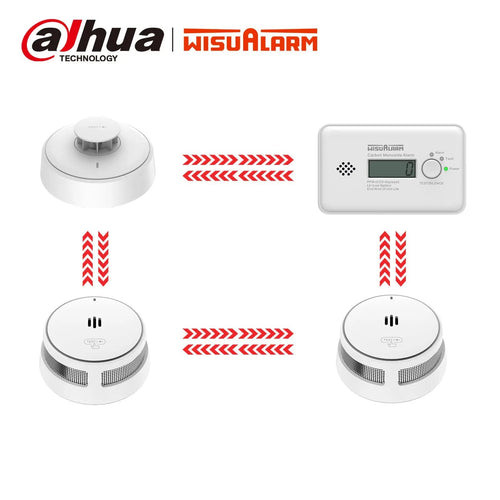
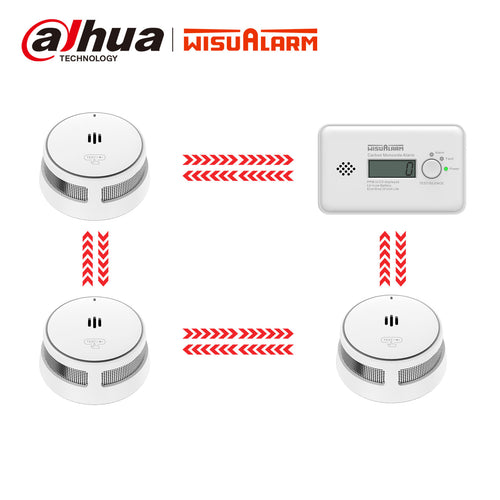
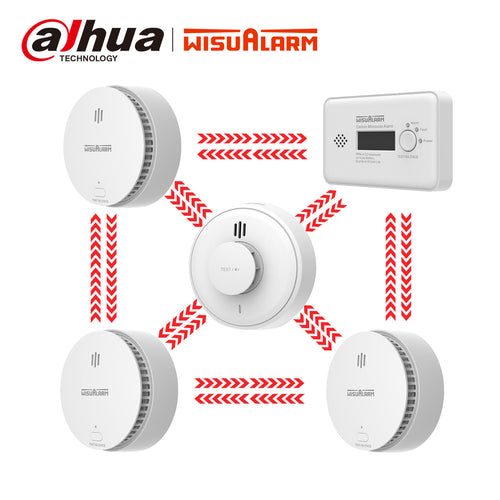
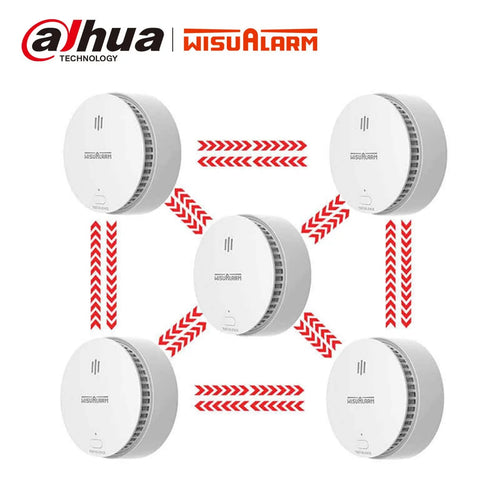
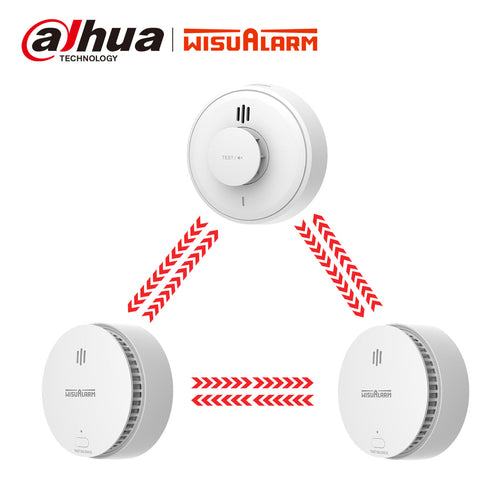
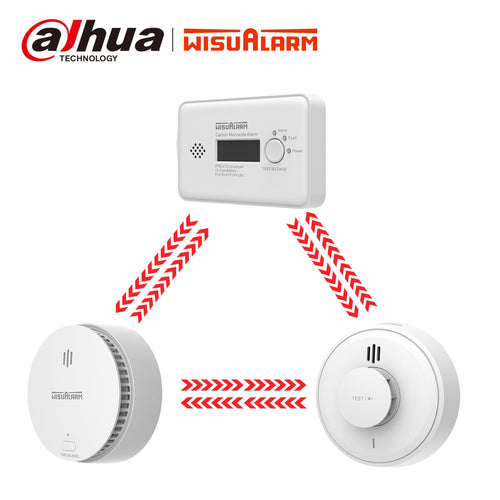
"Interconnected" means that when one device in the network detects smoke or heat, every device in the building sounds simultaneously. This creates a "total alert" environment, regardless of where the fire started.
2.1 Radio Frequency (RF) vs. Hardwired
European homeowners generally have two options for linking their systems:
-
Hardwired (AC): Alarms are physically connected via electrical cabling. While reliable, this is often difficult and expensive to retro-fit in historic European buildings or stone-walled apartments.
-
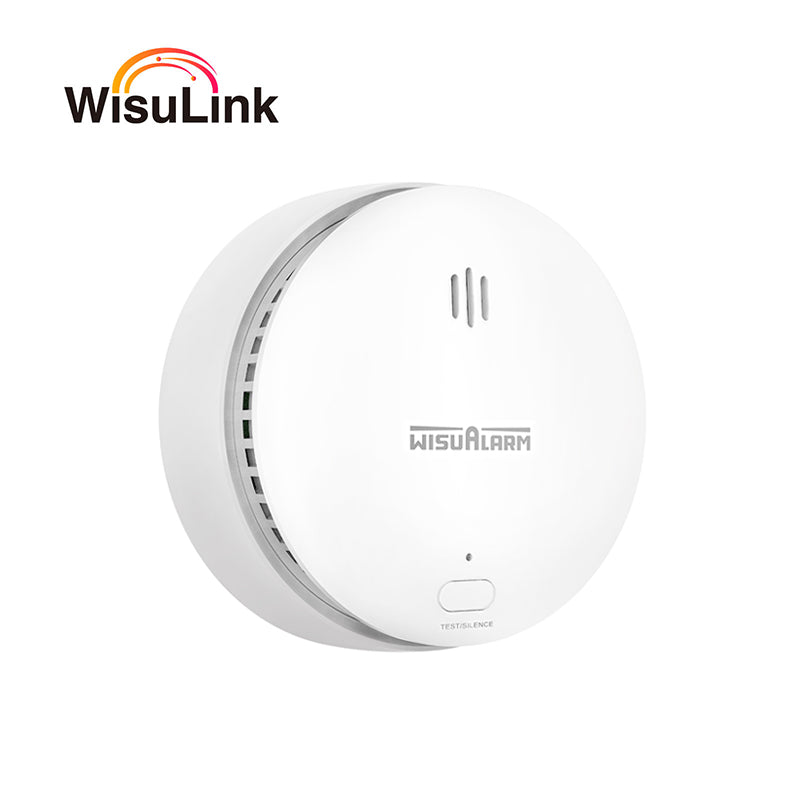
Wireless (RF) Interlinking: This is the gold standard for modern retro-fitting. Devices communicate via a dedicated, secure radio frequency (typically 868MHz in Europe). Systems like the WISUALARM series use a mesh network, where each device acts as a signal repeater, ensuring the alert reaches the furthest corners of the property.
2.2 The "One-Go, All-Go" Principle
This mechanism ensures that a small fault in a garage or utility room—areas often ignored by residents until smoke is visible—triggers an immediate response in the master bedroom. It eliminates the "information gap" that leads to catastrophic property loss.
Part 3: The European Regulatory Landscape
Europe is currently undergoing a massive shift in domestic fire safety laws.
3.1 Germany (DIN 14676 / DIN EN 14604)
Germany has implemented a mandatory smoke detector requirement (Rauchmelderpflicht) in all federal states. While the law focuses on installation in bedrooms and escape routes, insurance companies and professional installers increasingly recommend interconnected systems for multi-family dwellings and multi-story houses to ensure compliance with duty-of-care standards.
3.2 United Kingdom and Scotland
As of 2022, Scotland has the strictest laws in the UK, requiring all homes to have interlinked smoke and heat alarms. England and Wales are following suit with updated regulations for social housing and rental properties.
3.3 The EU Standard (EN 14604)
Any alarm sold in the EU must comply with EN 14604. However, for interconnected systems, consumers should look for EN 54-7 compatibility or equivalent RF standards to ensure the wireless communication is robust and interference-free.
Part 4: Specialized Protection – Smoke vs. Heat Alarms
A common mistake in European home safety is installing smoke alarms in every room. To build an effective interconnected network, you must use the right sensor for the right environment.
4.1 Photoelectric Smoke Alarms
These are best for hallways, living rooms, and bedrooms. They are highly sensitive to "smouldering" fires—the kind caused by electrical faults or cigarettes on furniture.
4.2 Heat Alarms (The Kitchen Essential)
Cooking fumes and steam are the leading causes of "nuisance alarms." In an interconnected system, a Heat Alarm should be used in the kitchen. It ignores smoke but triggers when it detects a rapid rise in temperature (typically 54°C to 65°C). Because it is linked to the smoke alarms in the rest of the house, it provides kitchen safety without the frustration of false alerts.
Part 5: The Role of the Smart Gateway
In 2026, a truly "protected" home is one that communicates with its owner even when they are away. By adding a Smart Gateway to an interconnected RF network, the system moves from "local alert" to "global monitoring."
-
Smartphone Notifications: Receive a push alert if an alarm is triggered while you are at work or on holiday.
-
Remote Silence: In the event of a known false alarm, you can silence the network via your app without needing to reach for a ladder.
-
Device Health Monitoring: The Gateway tracks battery life and sensor health, notifying you before a device fails.
Part 6: WISUALARM – Professional Grade Interconnected Safety
At WISUALARM, we have dedicated years of research to perfecting the balance between high-end industrial security and domestic ease of use. Our interconnected series is designed specifically for the diverse architecture of the European market.
Why WISUALARM is the Choice for European Professionals:
-
Seamless RF Interlinking: Our "One-Go, All-Go" technology supports up to 50 devices on a single network. Whether you live in a modern Berlin loft or a sprawling French villa, our signal remains rock-solid.
-
10-Year Sealed Battery Life: We use high-grade lithium batteries designed to last for the entire functional life of the sensor. No more chirping at 3 AM and no more annual battery replacements.
-
Split-Spectrum Sensor Technology: Our advanced sensors differentiate between harmful smoke and common household steam/dust, reducing false alarms by up to 50% compared to budget competitors.
-
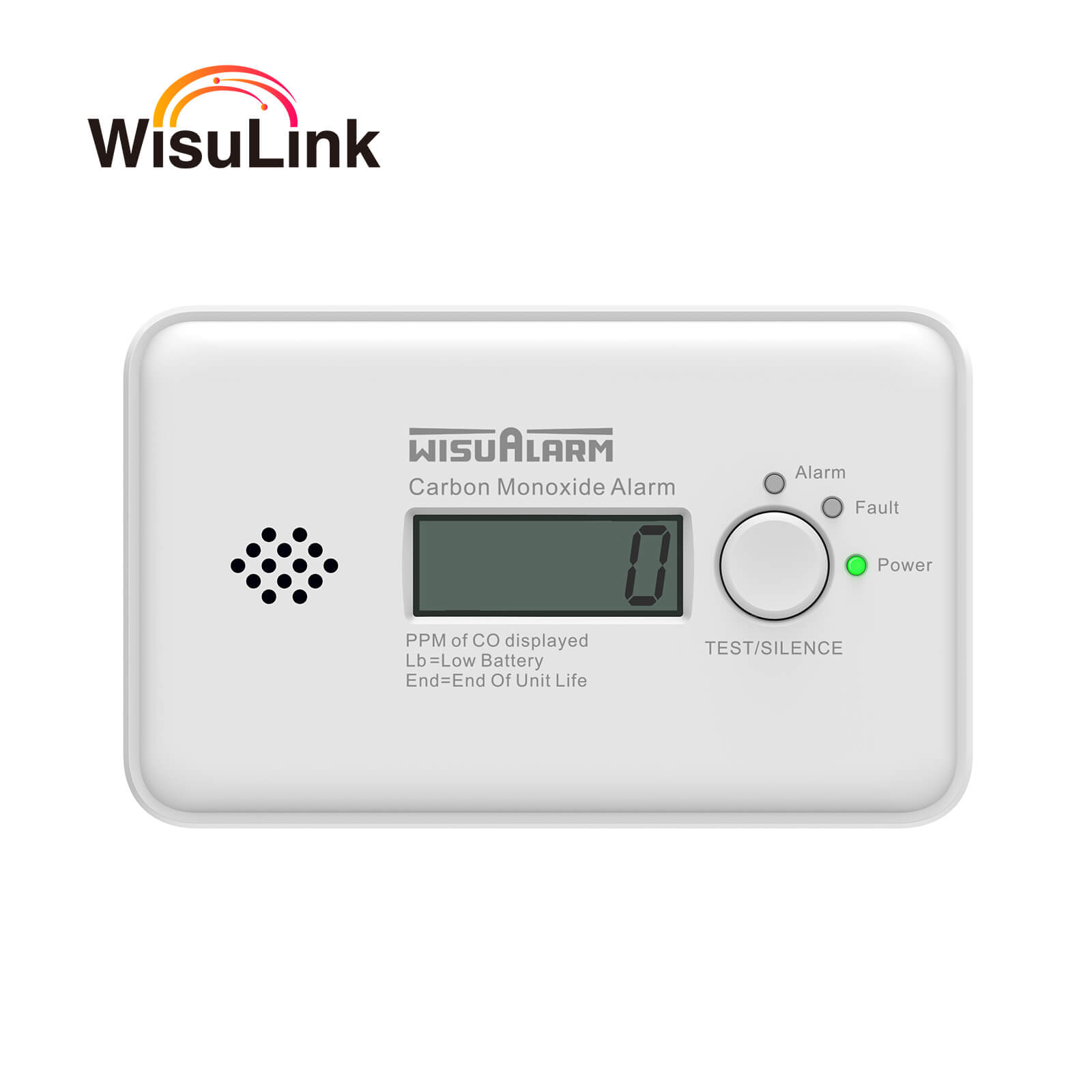
Full European Certification: All WISUALARM products are rigorously tested and certified to EN 14604 and EN 50291 standards, ensuring they meet the highest safety benchmarks in Germany, France, the UK, and beyond.
-
Installer-Friendly Design: With our unique twist-and-lock mounting system, a whole-home interconnected network can be set up in under 30 minutes with no specialized tools required.
Conclusion: Invest in Peace of Mind
A home is more than just a building; it is a repository of memories and the people we love most. Protecting it with a single, isolated alarm is a gamble. By choosing an interconnected system, you are installing a 24/7 security detail that never sleeps and always communicates.
Don't wait for the law to catch up with your safety needs. Upgrade to a WISUALARM Interconnected Network today.